Client
Friday Media Group
Industries
Date
May 2020 - Dec 2023
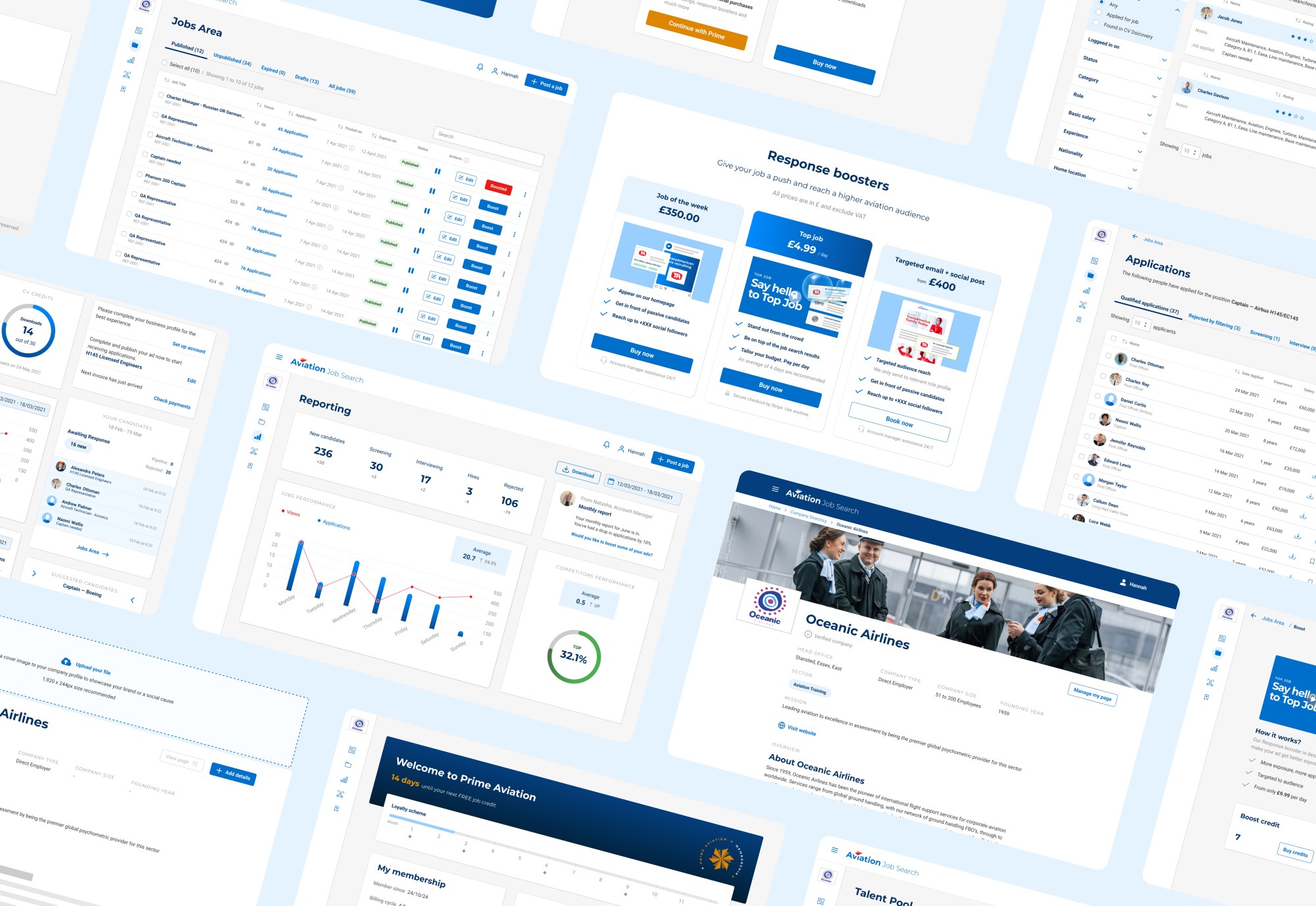
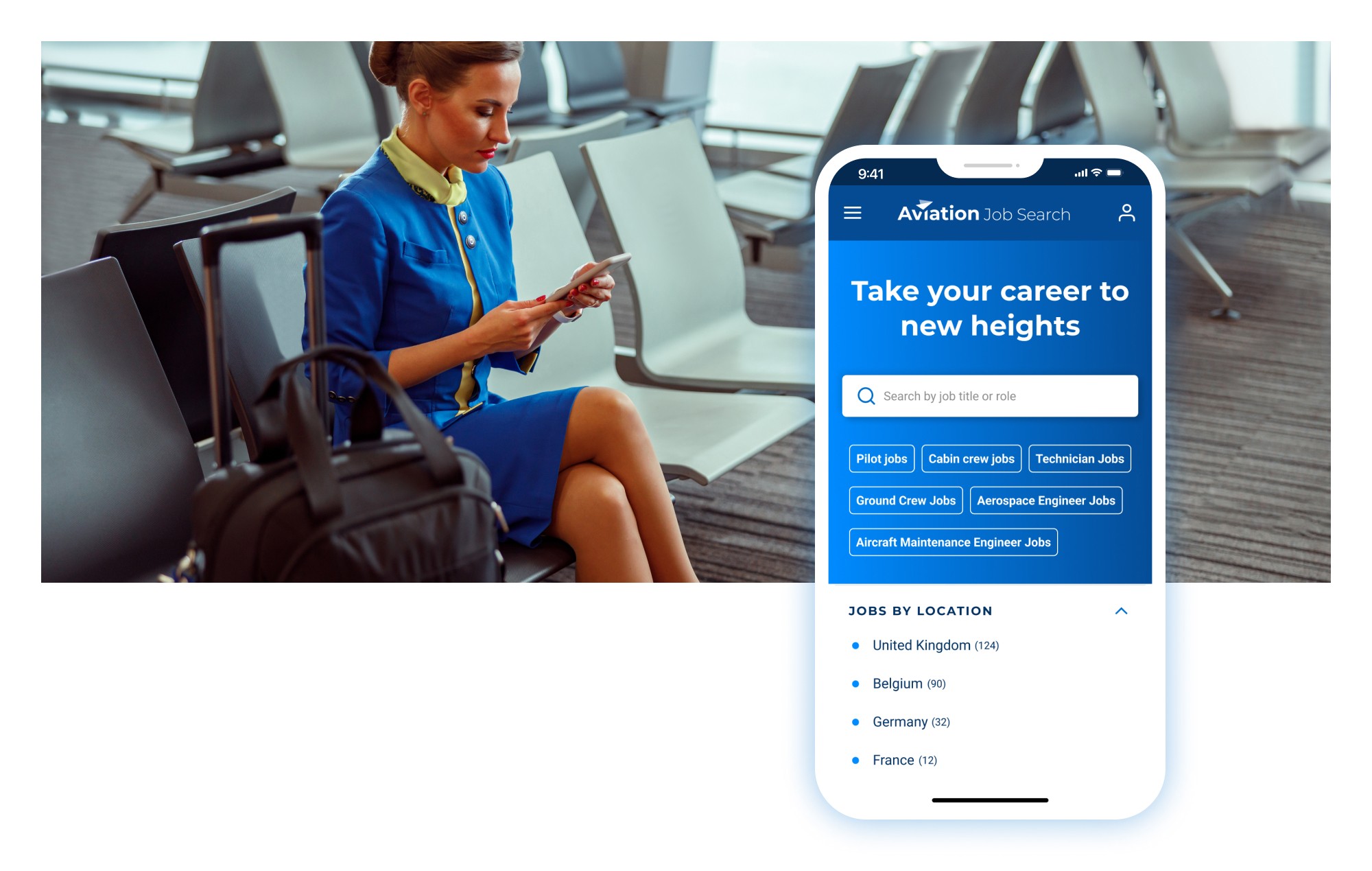
Aviation Job Search is a job board acquired by Friday Media Group, contained within a collection of specialised job boards in the UK. Their purpose is to connect employers with skilled professionals for specialist roles in the aviation market.
The challenge was to rebuild an outdated job board with scalability and migration in mind, since it would be reused for other 8 different websites in different markets. The main goal was to create a robust platform that connected skilled aviation professionals with recruiters in this niche market.
I started as a Product Designer and eventually transitioned to cover the responsibilities of a Product Owner, bridging the gap between design and implementation.
Design & Prototyping: Sketch, Axure, Figma
Team collaboration & Project Management: Slack, Clickup, Google Meet
User Research & Testing: Miro, Maze, Google Analytics
The aviation industry faces a unique challenge in recruiting - professionals have very specific profiles and are difficult to find. Traditional job boards in this specialized sector fall short, necessitating a tailored solution.
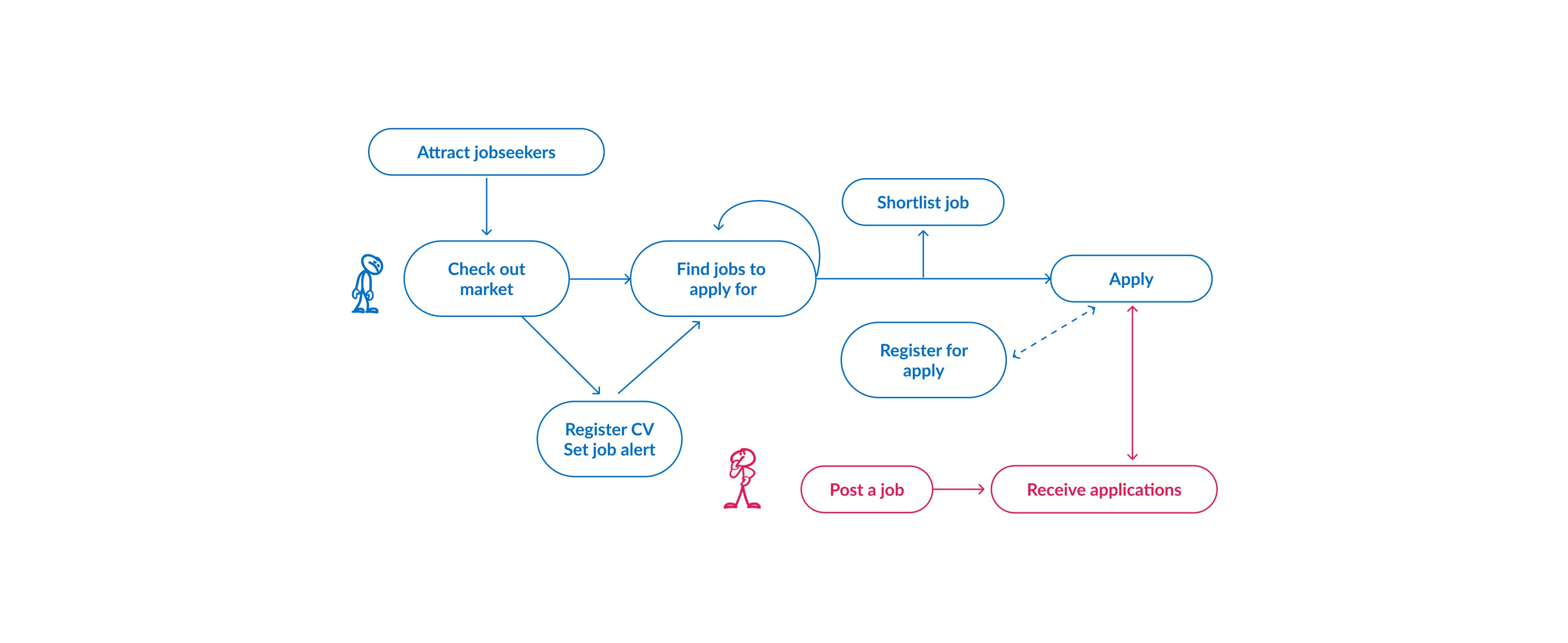
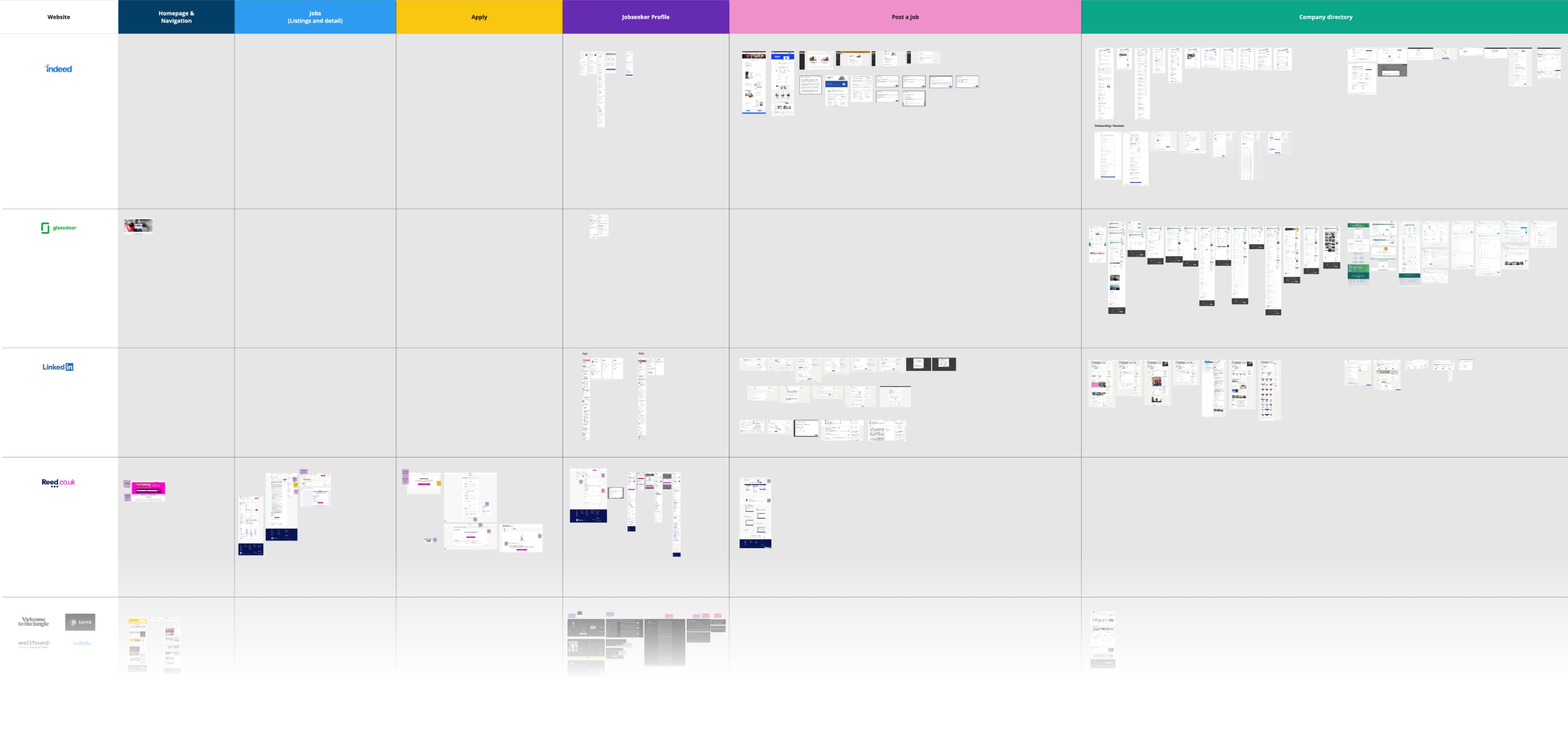
Market research and competitor analysis indicated two primary methods for connection - job postings for active job seekers and a candidate database for recruiters to target passive candidates.
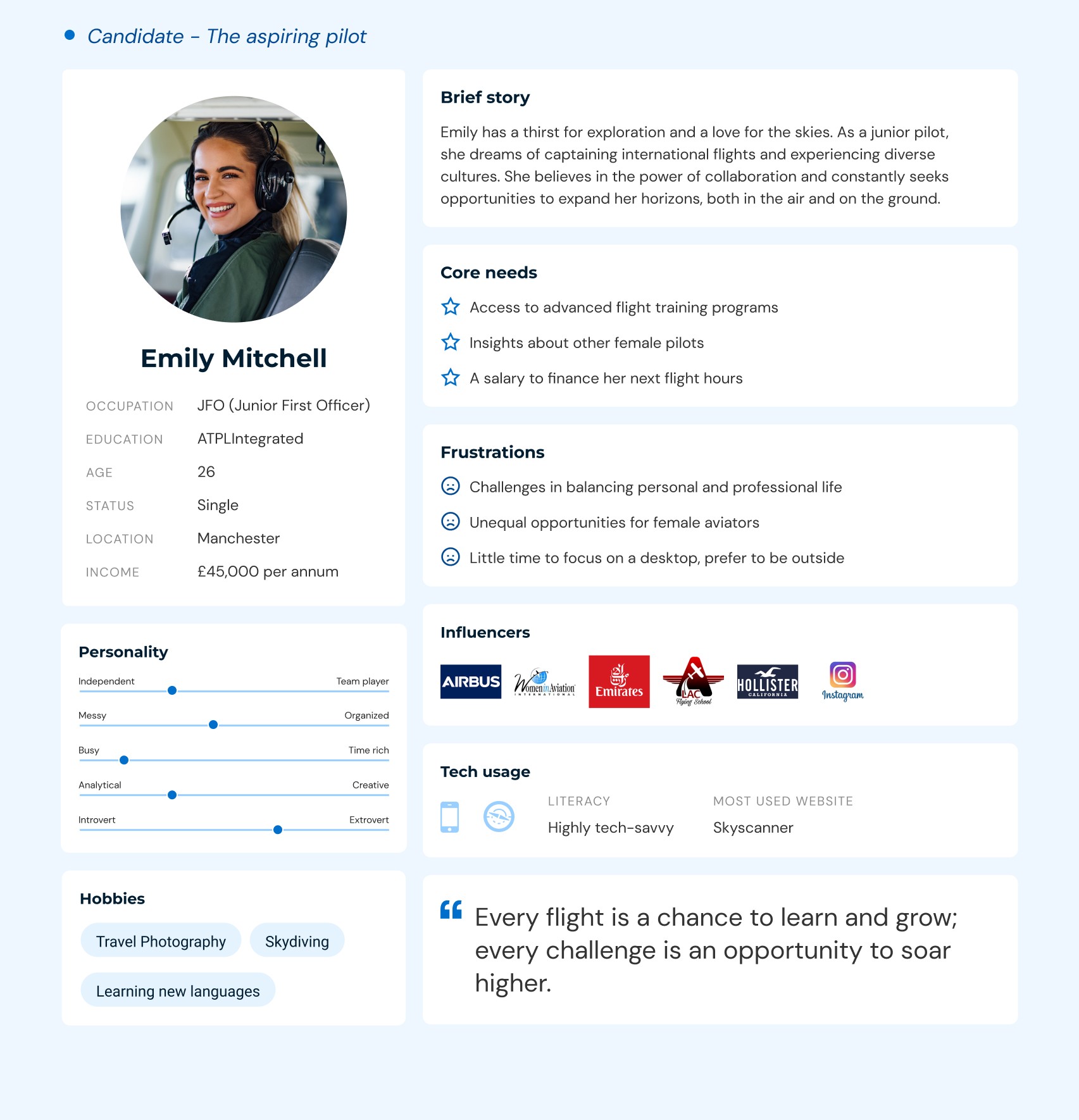
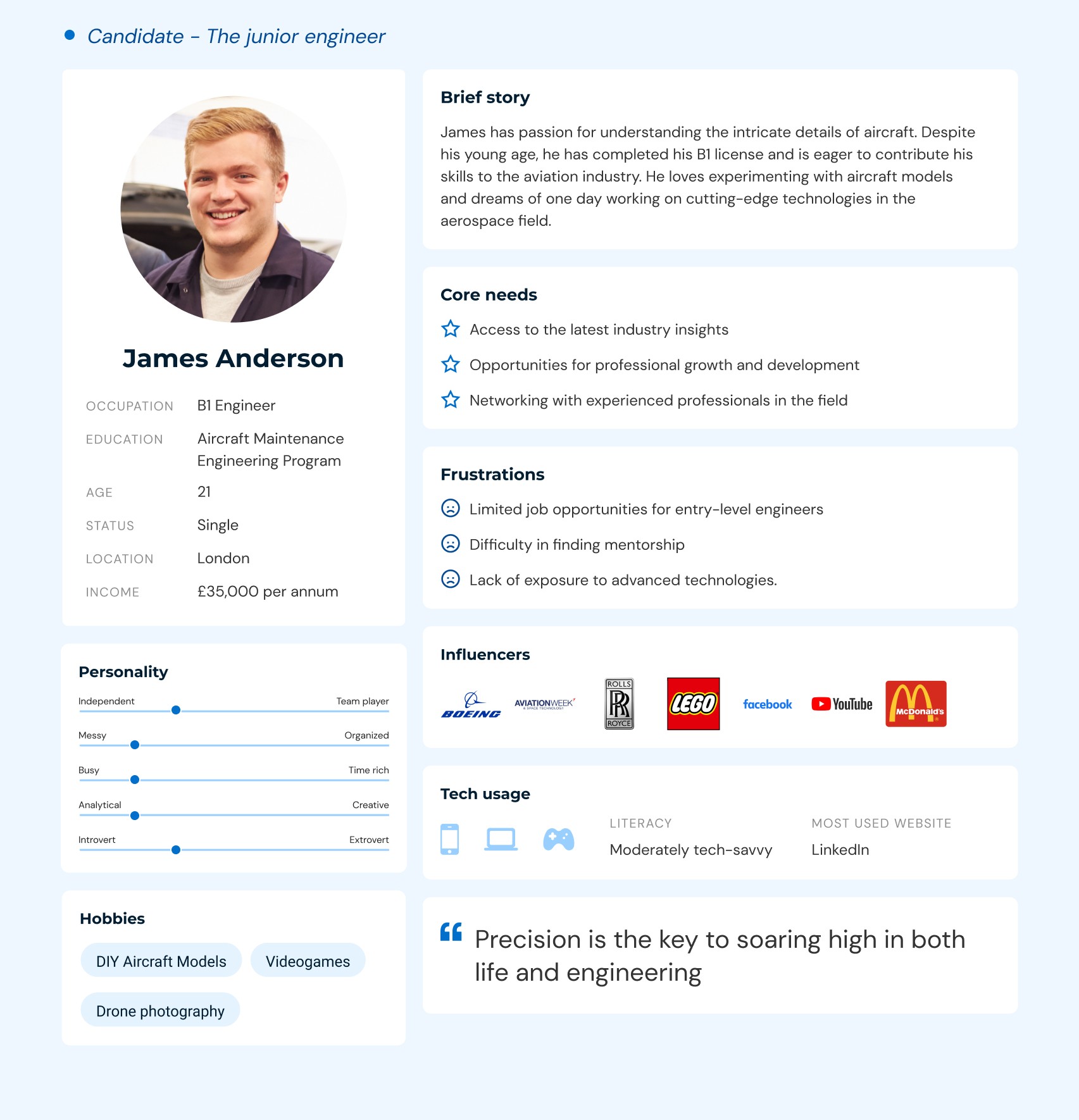
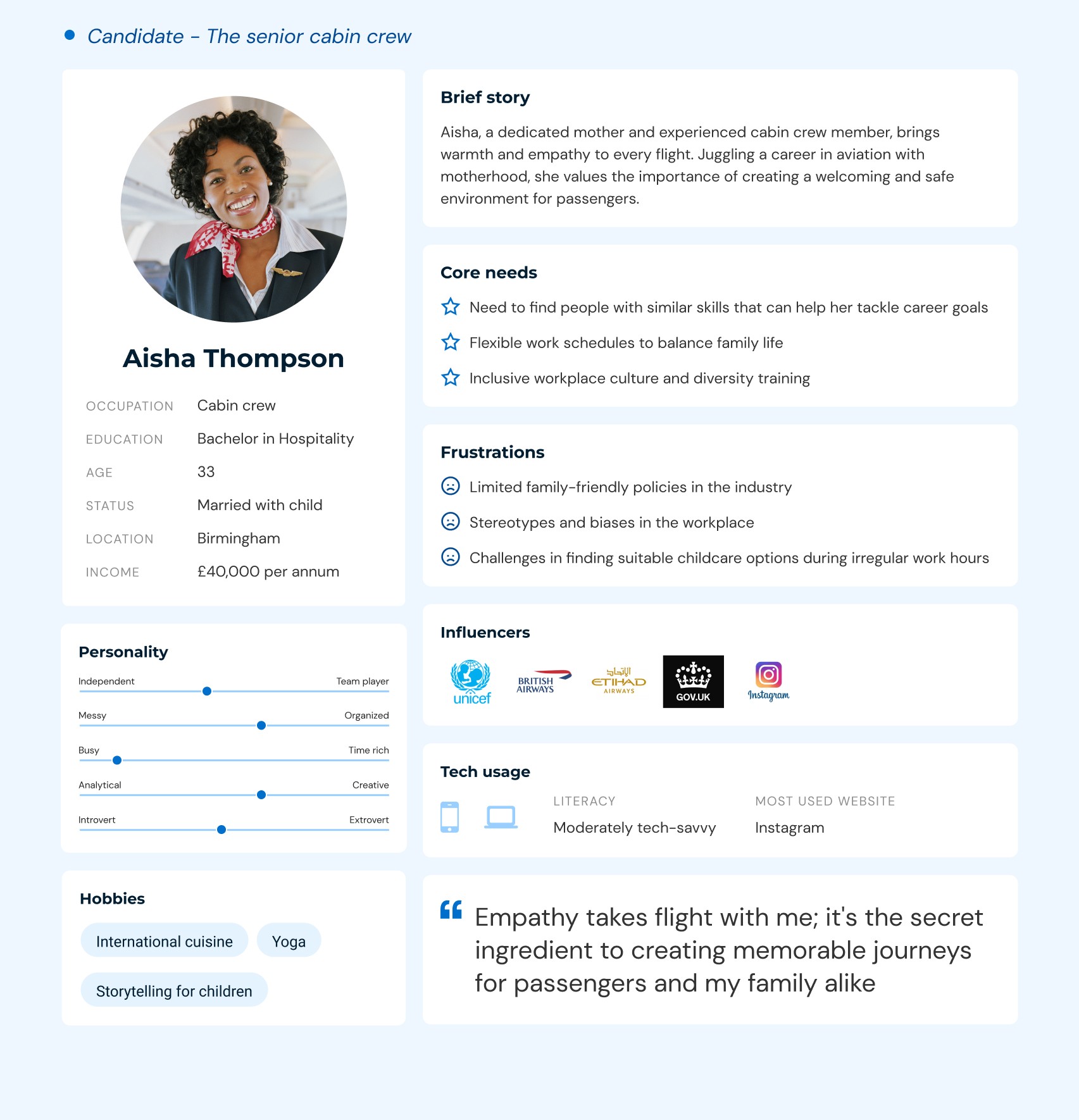
Jobseekers
This group includes pilots, cabin crew, engineers, and other aviation-related roles, each with unique needs and career paths. They come to Aviation Job Search for specific career advice and job offers that are difficult to find on other generic sites.
Recruiters
Comprising airlines, recruitment agencies, and aviation companies, these users seek efficient ways to find qualified candidates with reduced budgets as they use Aviation Job Search as one of their many channels to hire.
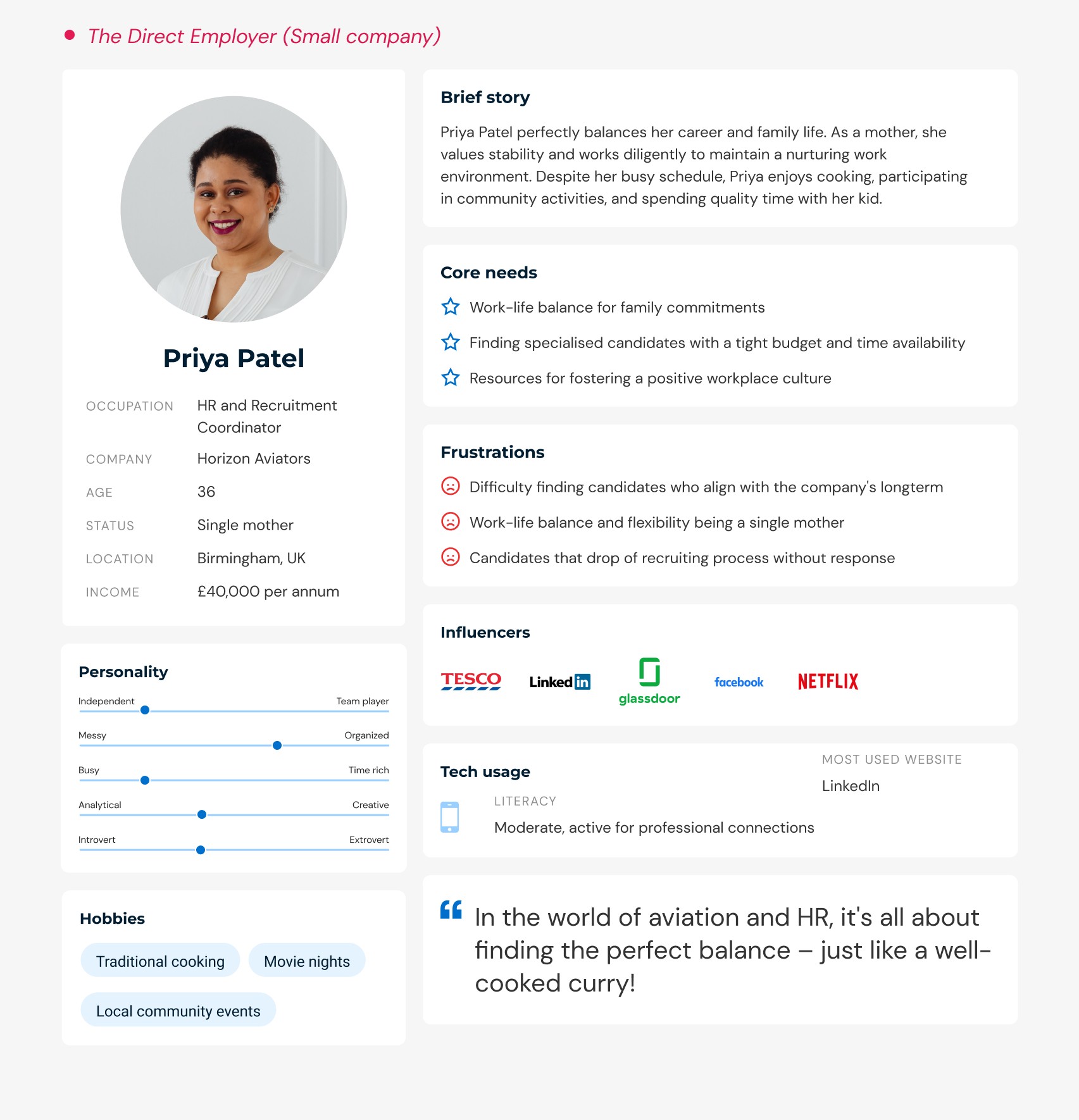
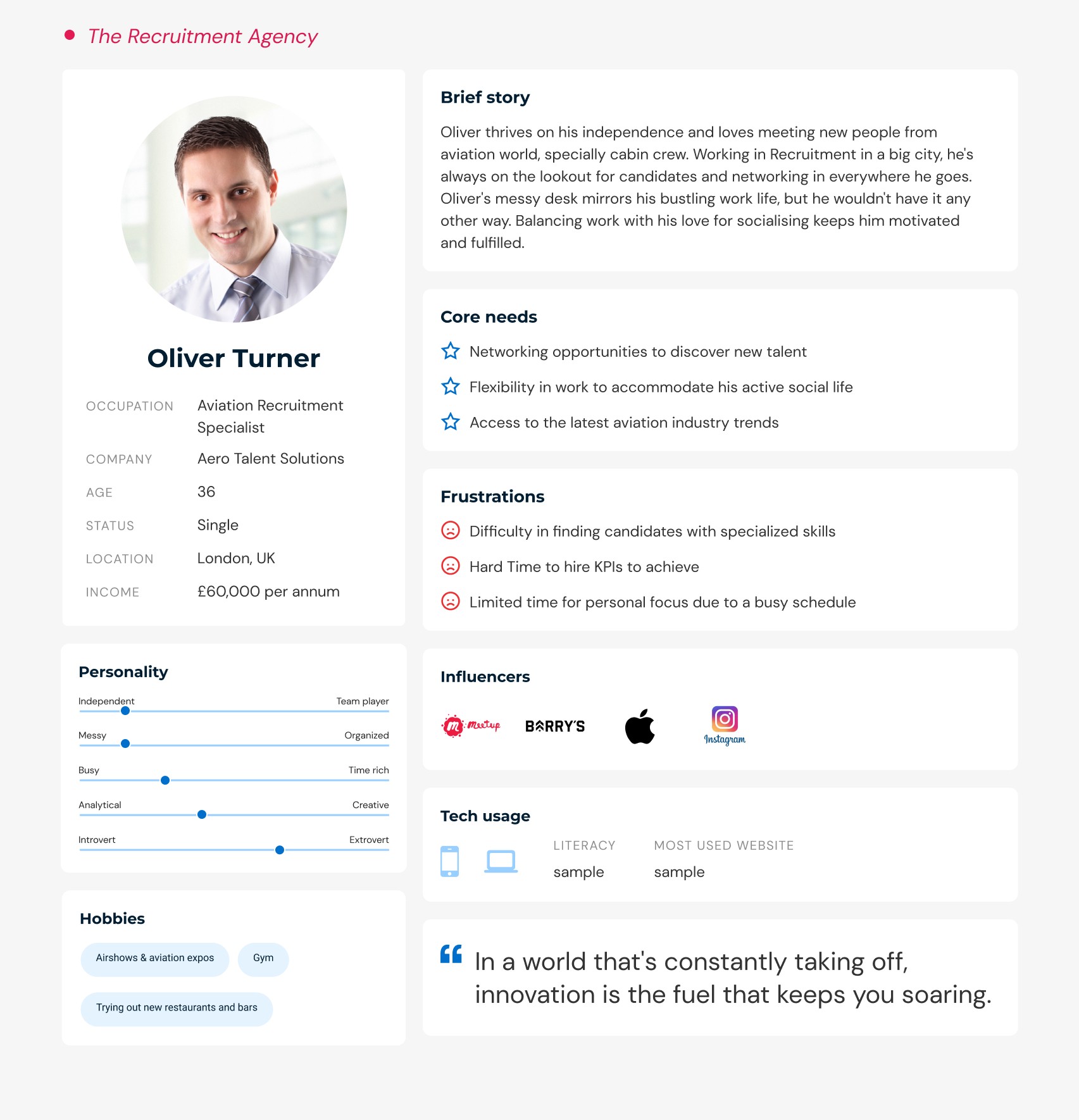
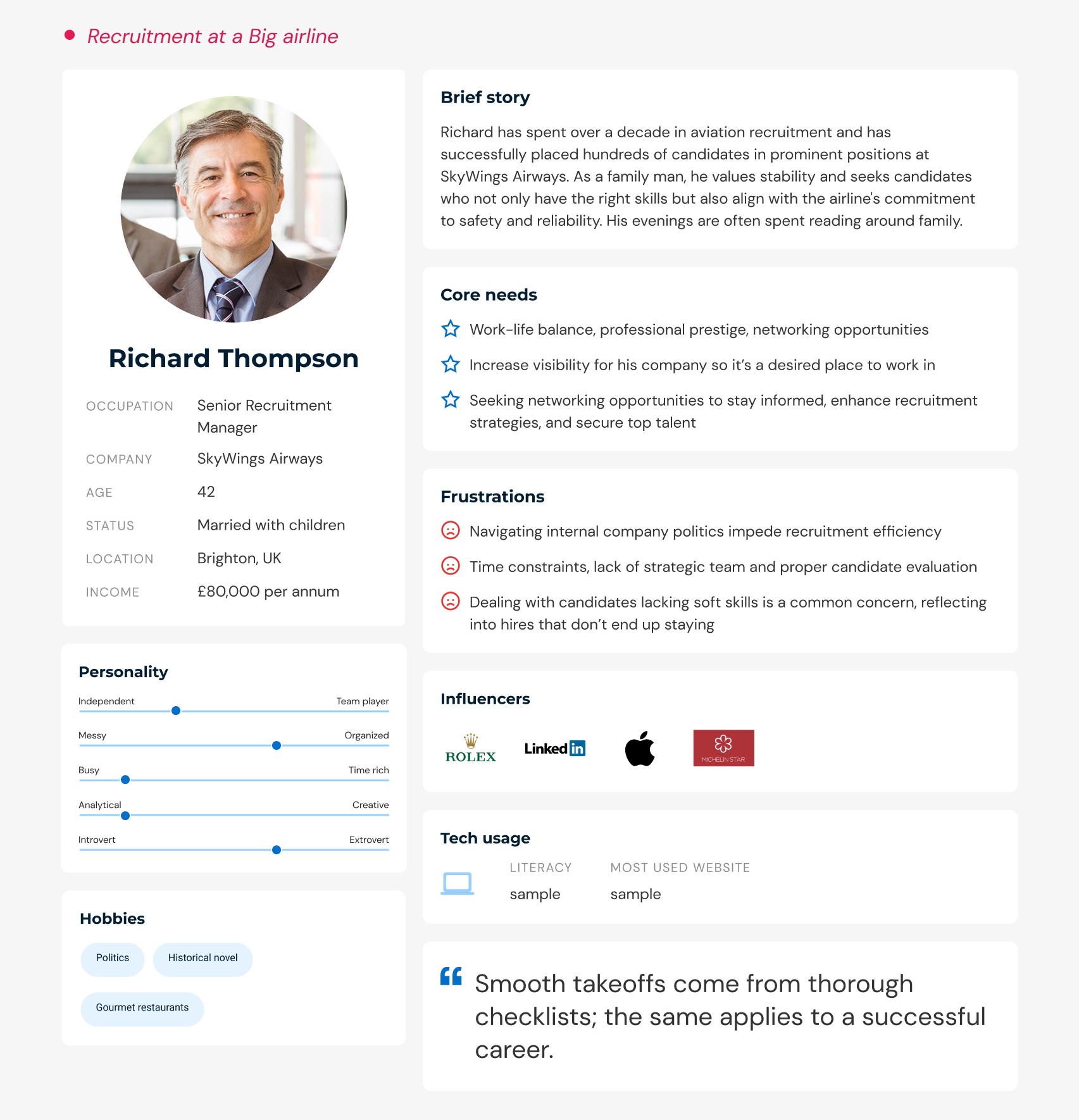
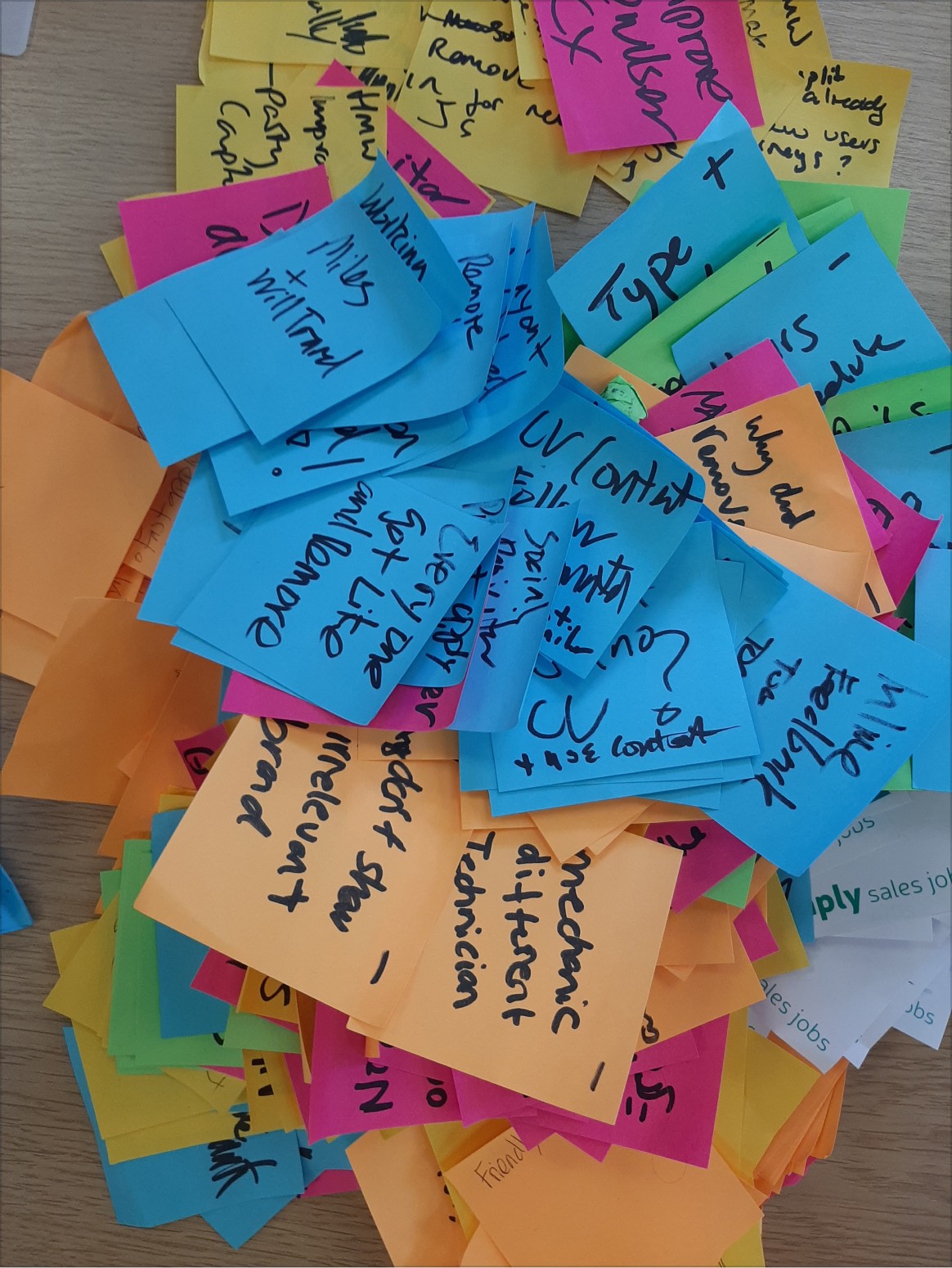
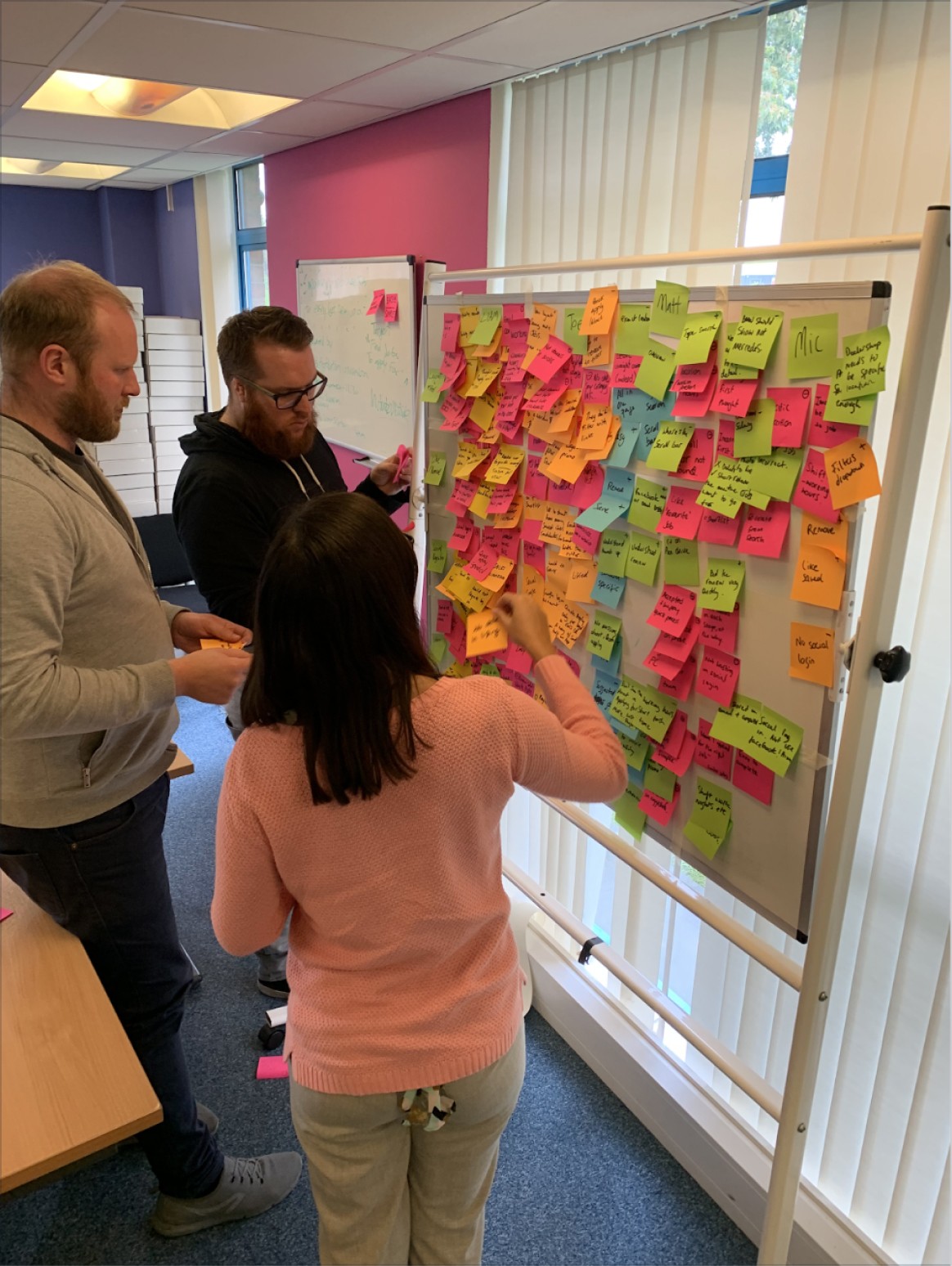
"How Might We" questions: We began by posing "How Might We" questions to tackle specific challenges faced by our users. This approach fostered creative thinking and solution-focused brainstorming.
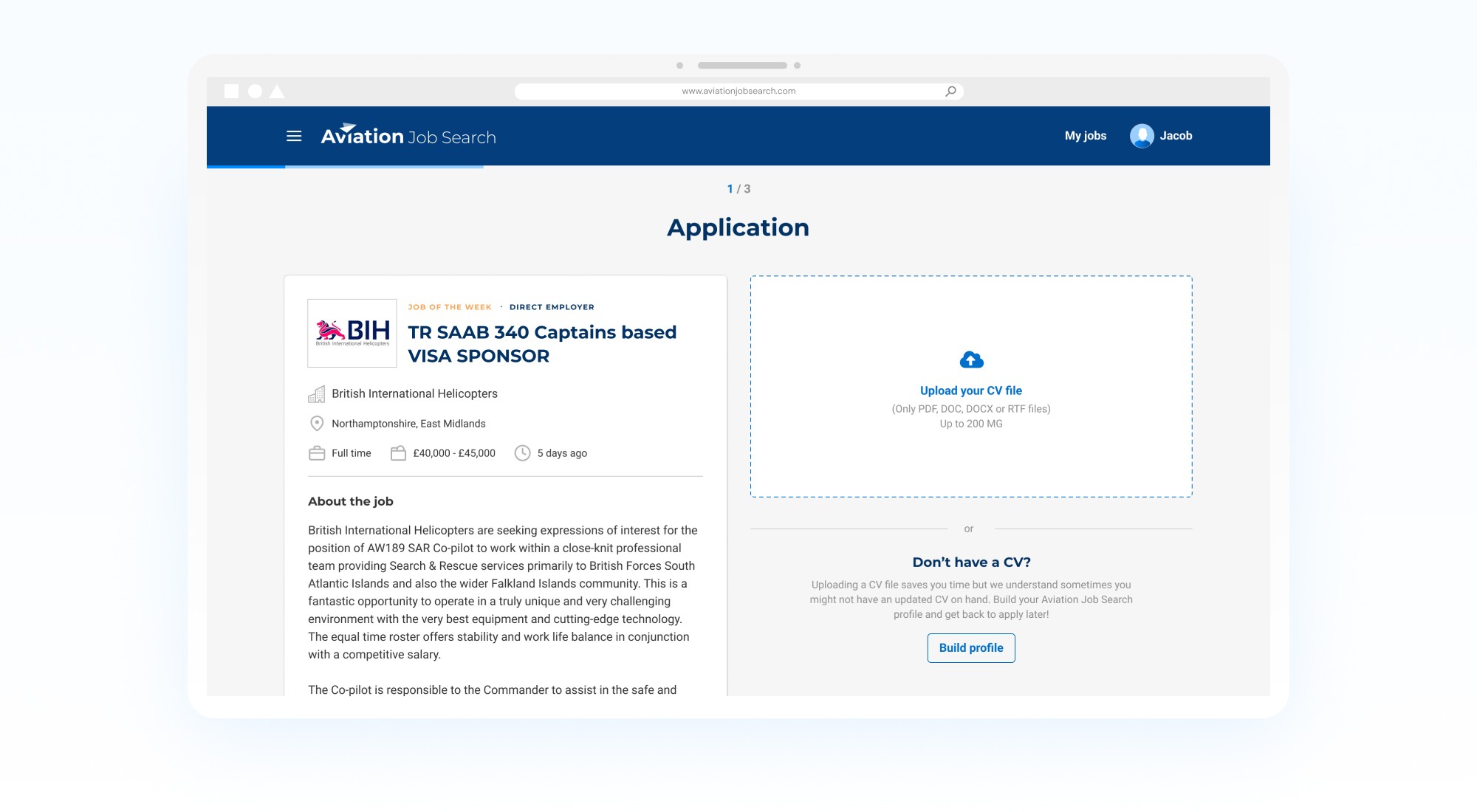
For instance, "How might we simplify the job application process for users?"
Product hypotheses: We formulated hypotheses about what changes or additions might improve the user experience and efficiency of our platform. For example, by scrapping jobs we will bring more content to our site, which will bring more job seekers to apply, this will result eventually in more recruiters coming to post their ads directly.
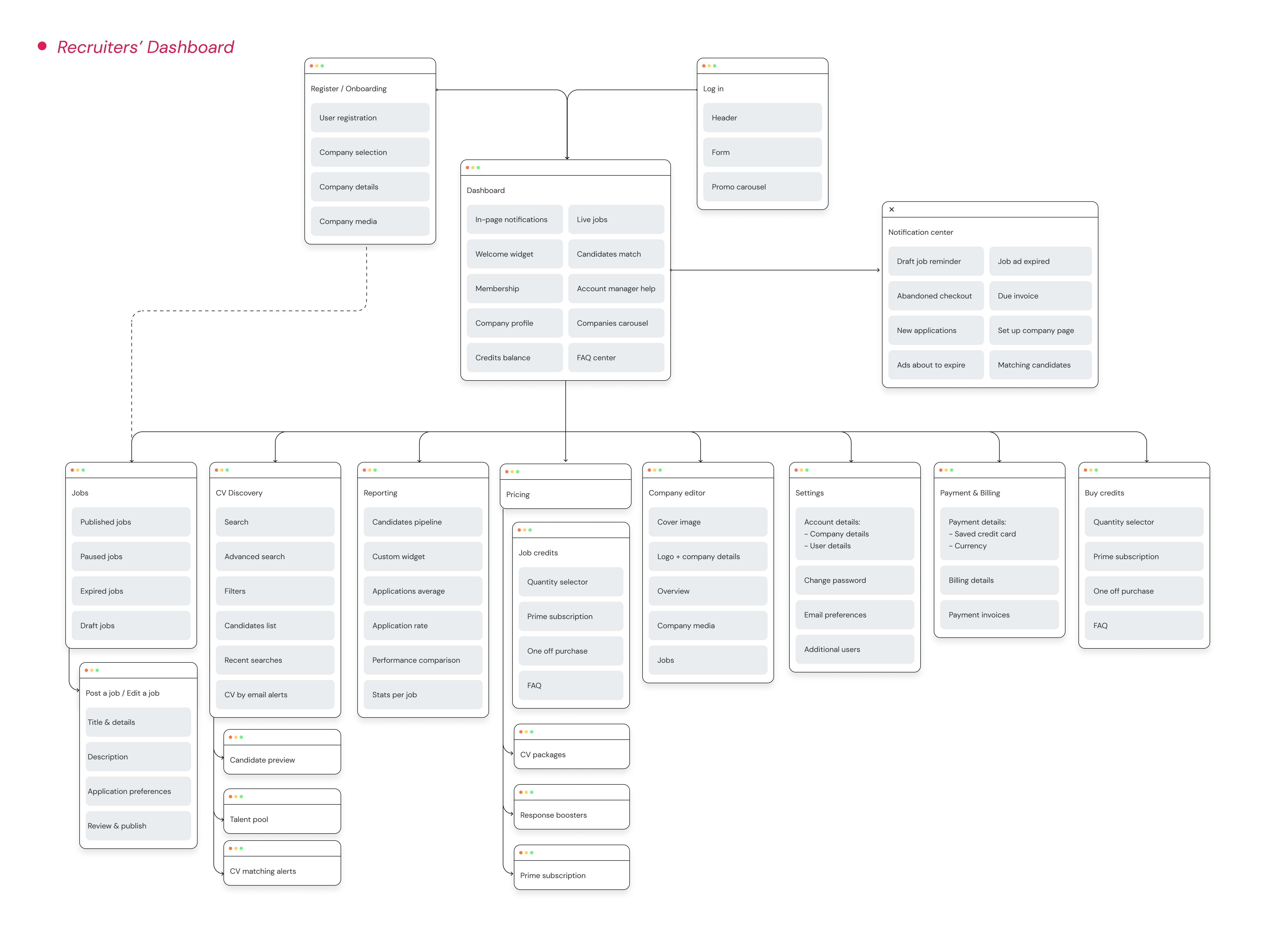
Sitemaps and user flows: To ensure a seamless transition during the redesign, we meticulously planned the sitemaps and user flows. This was crucial in maintaining continuity and ensuring no critical features or content were overlooked.
We undertook the redesign of the brand, focusing on making it more modern and scalable to the new website. Key highlights from these processes include:
Branding-wise we remade the logo so it could easily sit within the nav bar and gave a better favicon scalability.
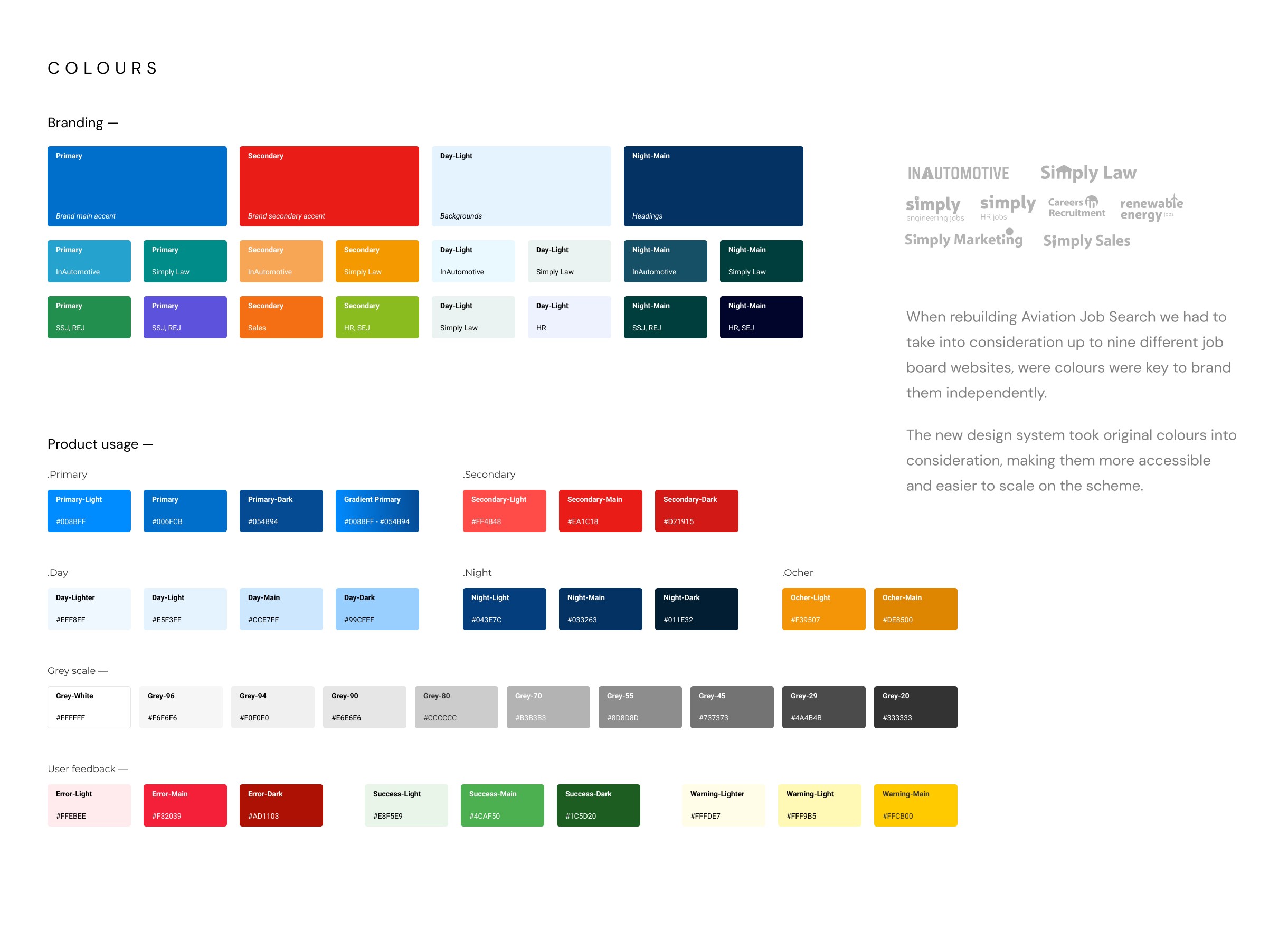
Important colour update for accessibility, ensuring compliance with WCAG guidelines. The colour palette of different websites was updated too, so we could simplify the design system.
Typography: Montserrat was used for its modern appearance, and transitioned from Light to Bold given the latest trends in UI for big weighted titles. For body text, we maintained Roboto for its scalability to mobile phones and ability to display much text within the same line.
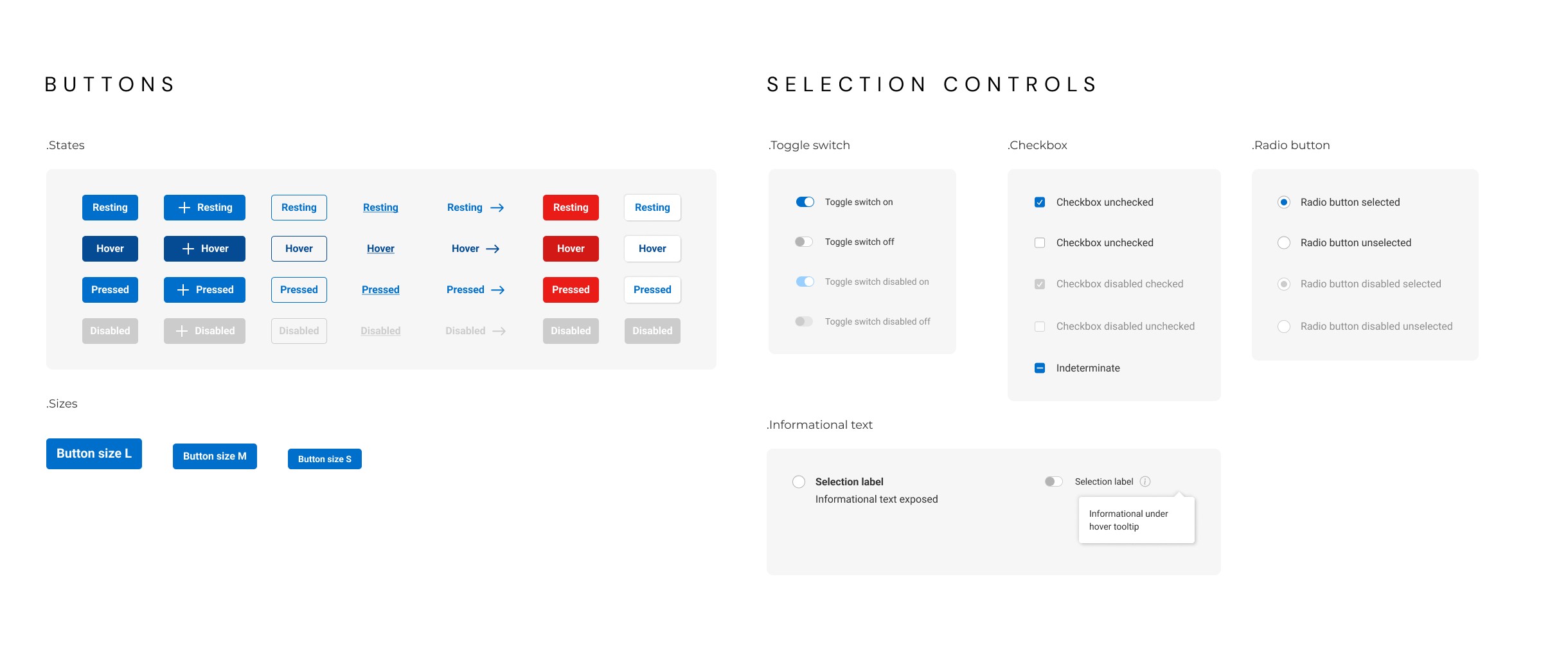
Components and Patterns: We defined a set of reusable components and patterns. This streamlined the process of designing pages and allowed us to quickly adapt the design system for other websites like Aviation Courses and Career Hub.
Check an overview of the Design System
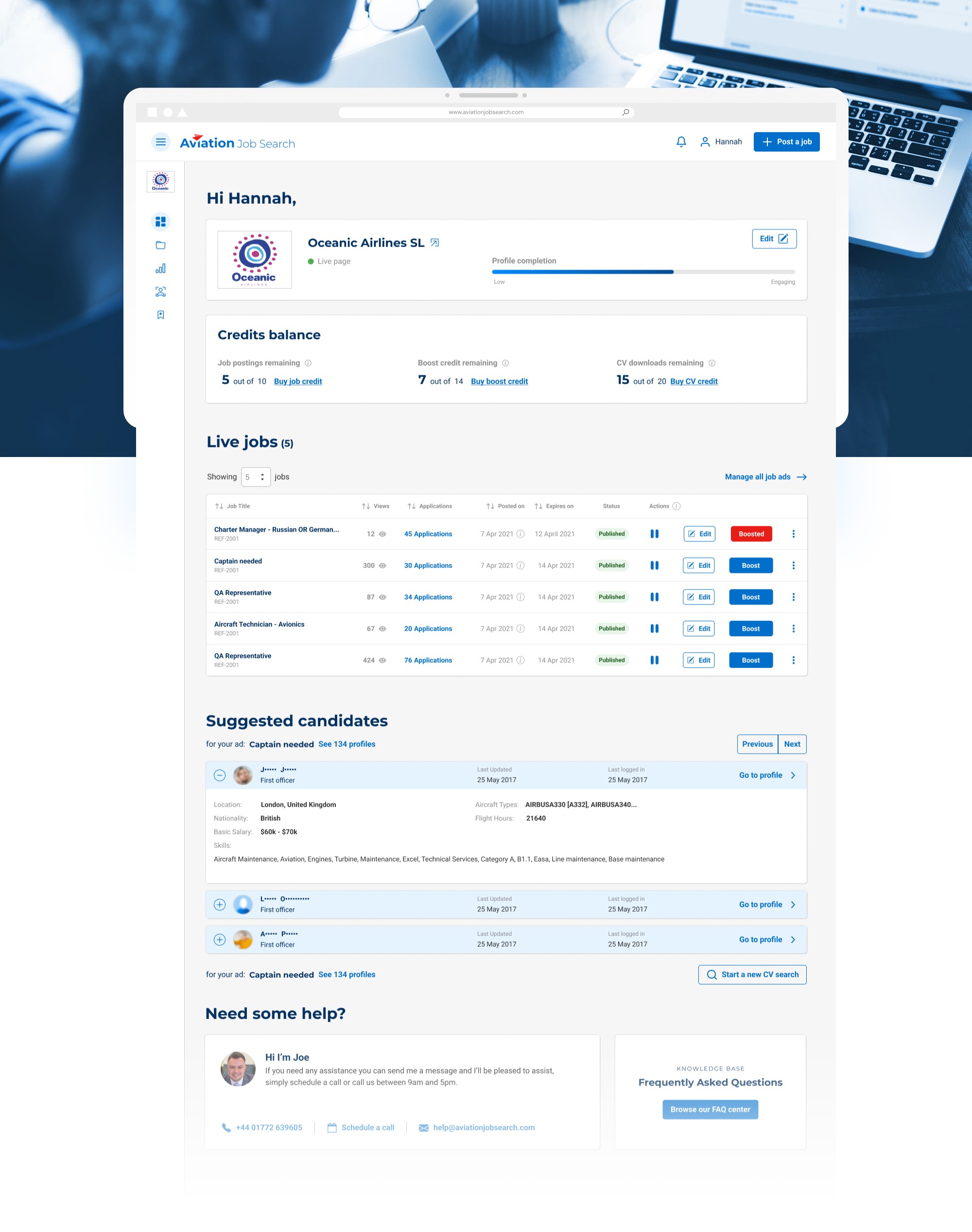
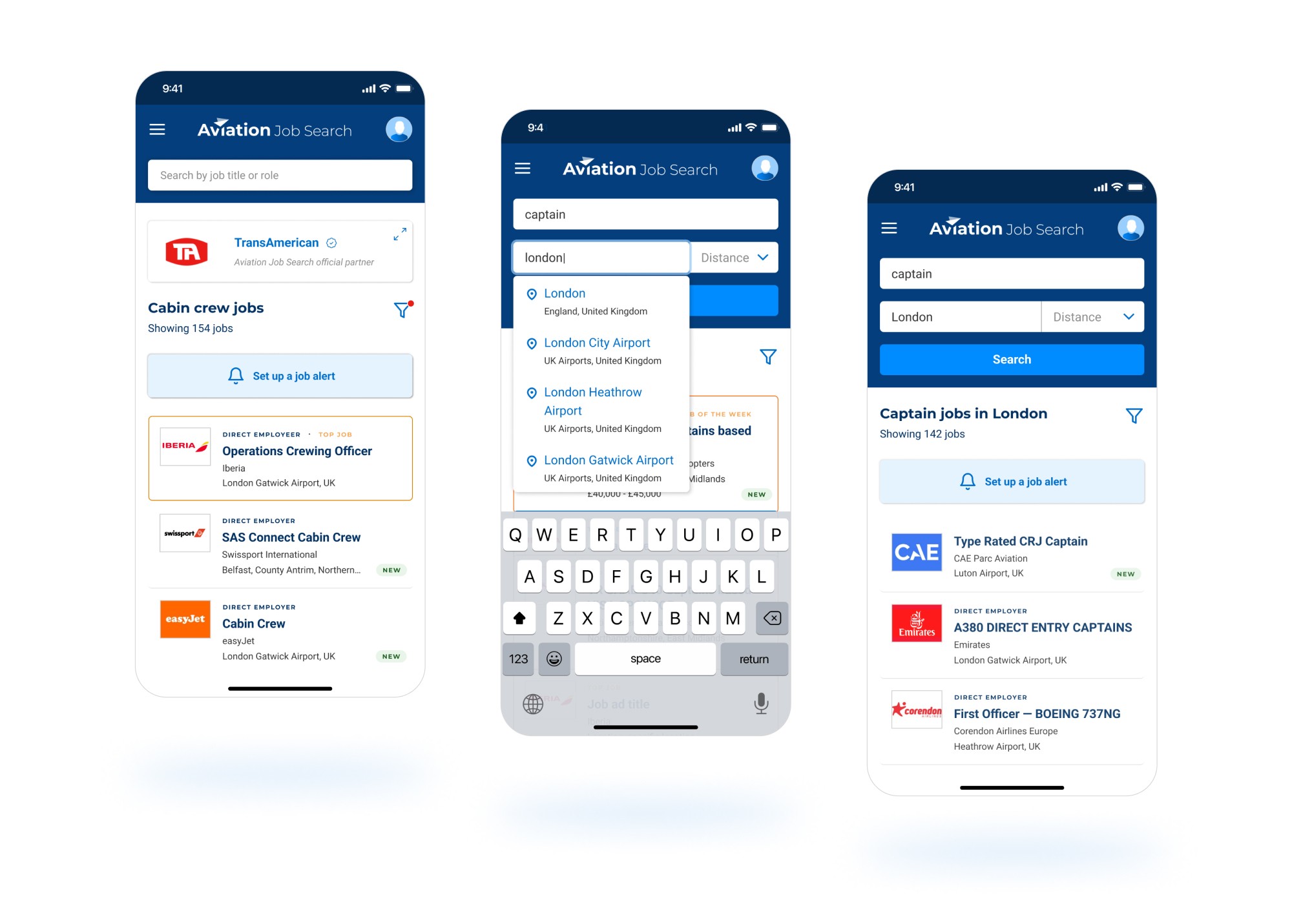
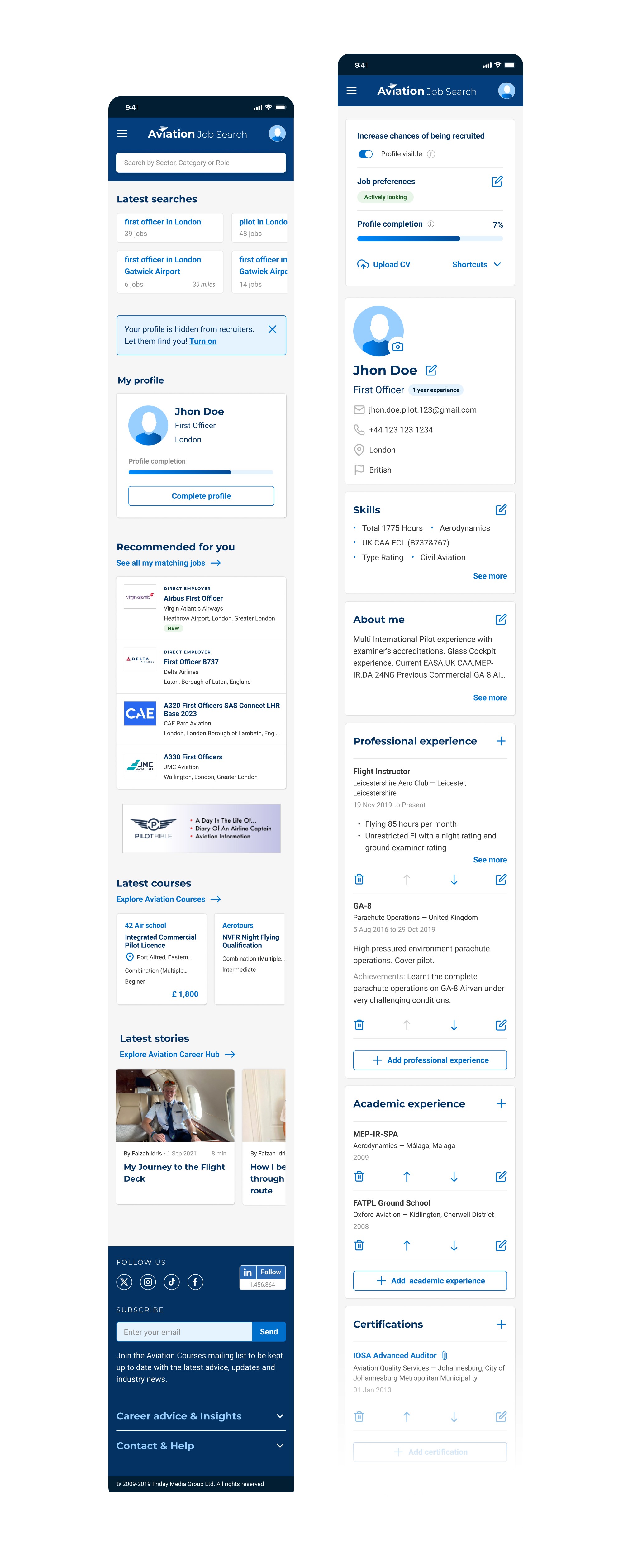
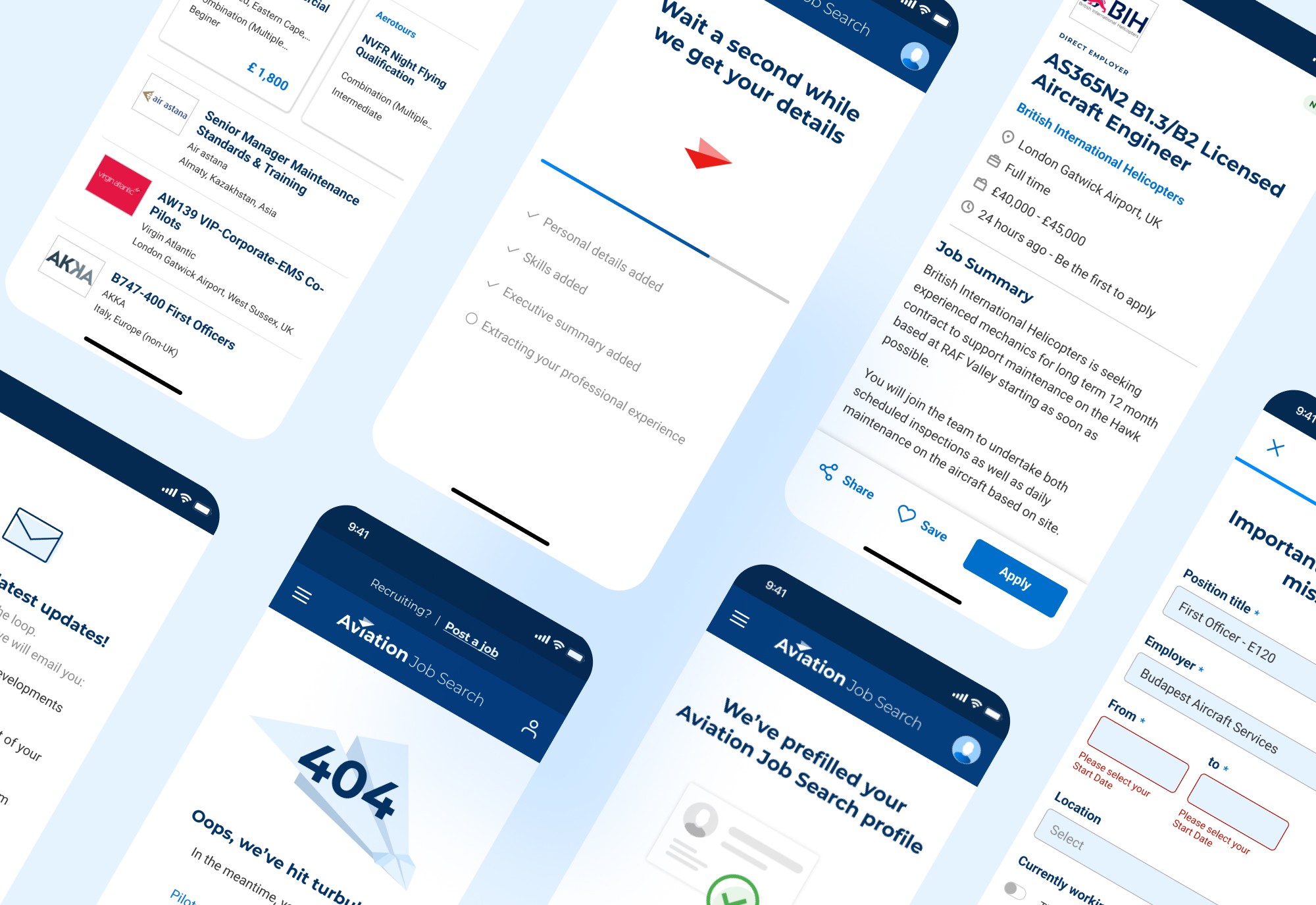
With the design system in place, we were able to produce medium to high-fidelity mockups rapidly.
This facilitated early feedback from various team members, ensuring that the designs were aligned with both user needs and technical feasibility.
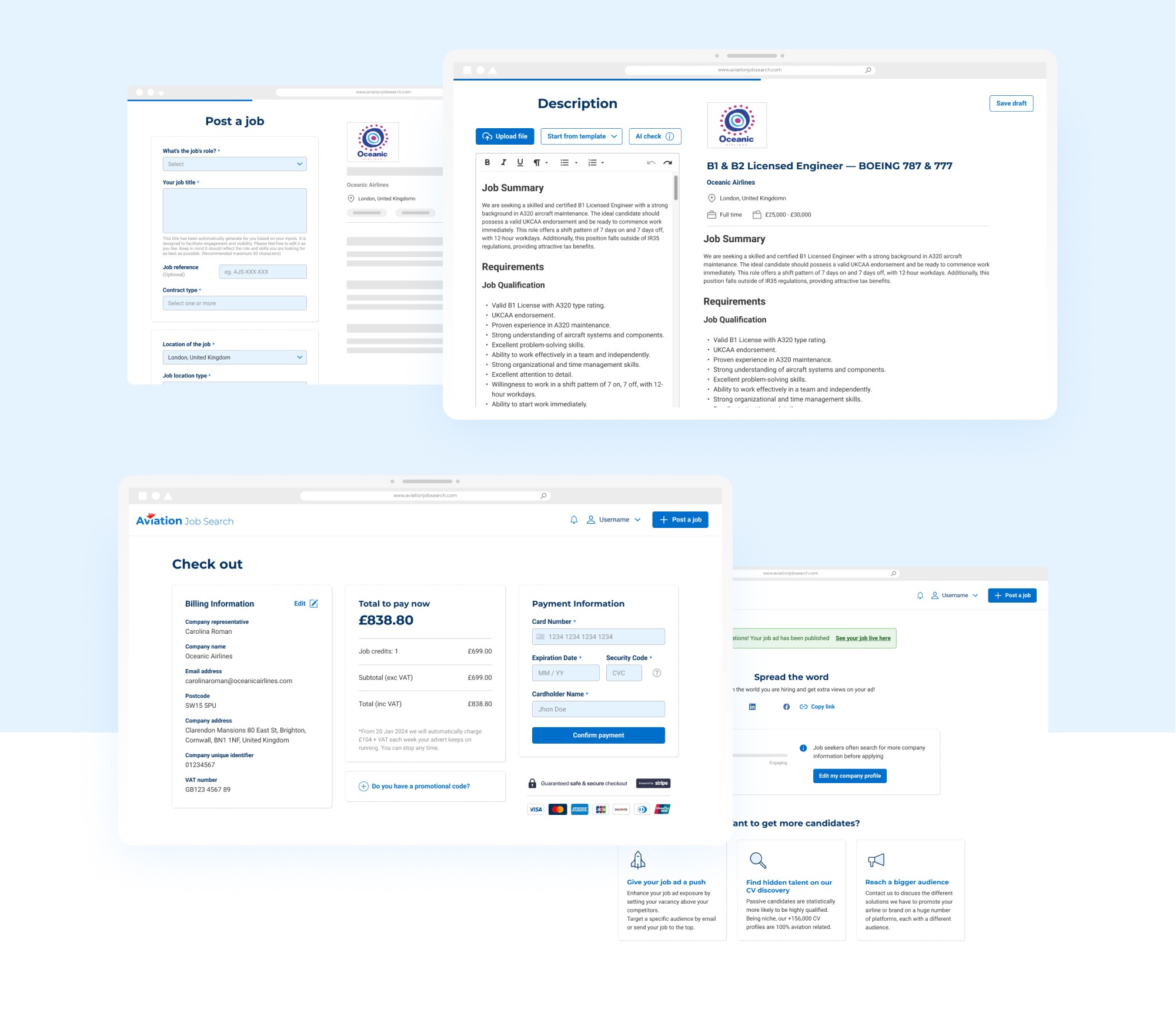
For instance, the job posting interface went through several iterations, each time simplifying the process and making it more intuitive based on team and users' feedback.
Qualitative and quantitative methods
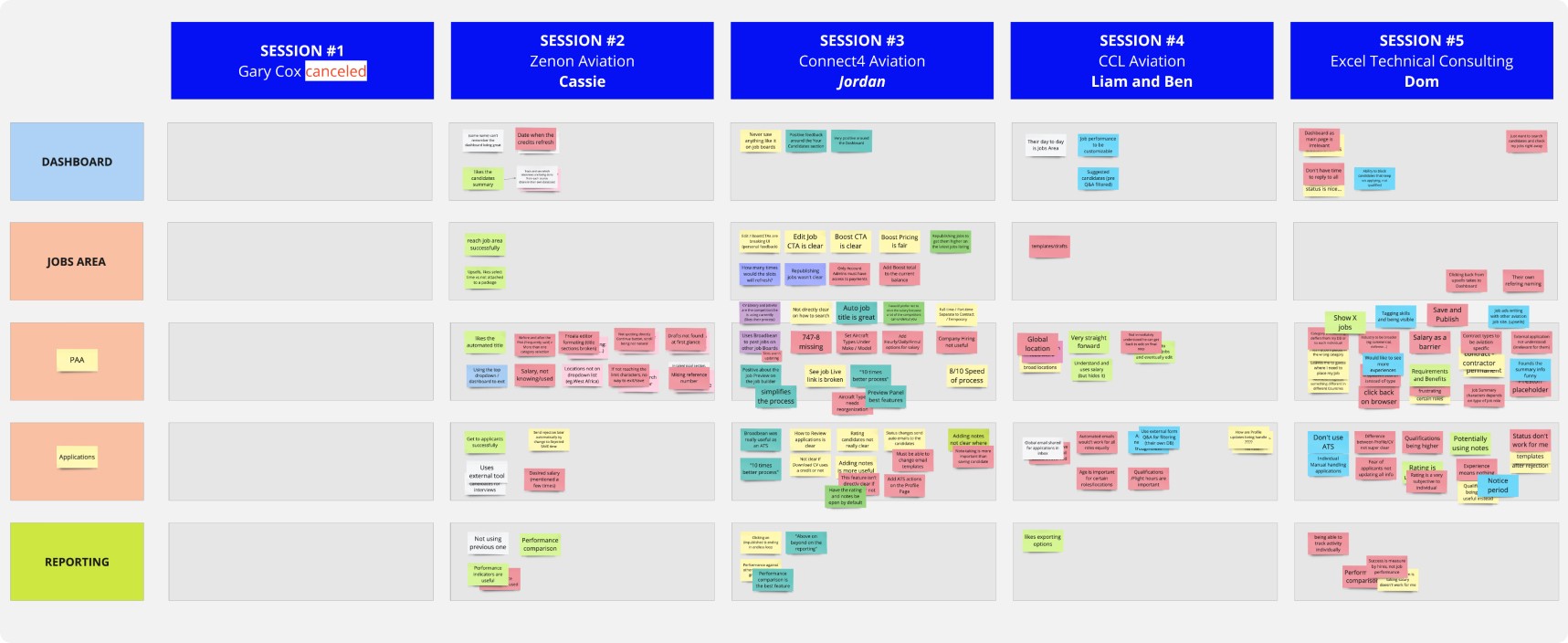
We employed a combination of user interviews, usability testing and analytics for reviewing our output. This blend provided a comprehensive understanding of user behaviour and preferences.
Feedback from both job seekers and recruiters was invaluable. For example, job seekers suggested improvements in the job search filters, which we promptly incorporated.
Our continual testing and feedback loop enabled us to refine the user interface and experience, focusing on ease of use and efficiency. Recruiters' feedback led to the simplification of the job advert creation process, making it more streamlined and less time-consuming.
Implementation: Adopting an agile methodology, the project saw incremental improvements. In the beginning, I brought this product to life by designing its pages and structure. In its latest phases, I was pivotal in translating designs into product requirements and planning successive versions.
Results: The redesign led to an increase in subscription rates and average order value (AOV). Time taken by recruiters to post job adverts was significantly reduced, enhancing their user experience. Additionally, there was a notable increase in job applications and candidate profile completion rates, contributing to revenue growth through one-time payments from direct employers.